
Black Sabbath es una banda británica de heavy metal formada en 19683 en Birmingham por Tony Iommi (guitarra),Ozzy Osbourne (voz), Geezer Butler (bajo) y Bill Ward (batería). Desde entonces, la banda ha sufrido multitud de cambios de formación, con más de veinticinco antiguos miembros. Formados originalmente como una banda de blues rock llamada en un principio Polka Tulk y posteriormente, Earth, la agrupación incorporó letras sobre ocultismo y terrorcon guitarras afinadas de modo más grave, cambiando su nombre por Black Sabbath y consiguiendo varios discos de oro y platino en la década de 1970. Al ser una de las primeras y más influyentes bandas de heavy metal de todos los tiempos, Black Sabbath ayudó a desarrollar el género con publicaciones tales como Paranoid, álbum que fue cuatro veces disco de platino. Han vendido más de quince millones de copias sólo en los Estados Unidos.
Ozzy Osbourne fue despedido de la banda en 1979 para ser
reemplazado por Ronnie James Dio, antiguo vocalista deRainbow.
Su etapa en la banda gozó de la publicación de dos discos, y produjo un marcado
cambio en varias características de la banda, desde el contenido lírico de los
temas hasta su estructura musical. Sin embargo, tantoHeaven and Hell como Mob Rules gozaron
de una considerable aceptación por la crítica y los aficionados, convirtiéndose
varios de sus temas en clásicos de la banda.[cita requerida] Black Sabbath
vio cómo, a lo largo de las décadas de
1980 y1990, pasaron cuatro vocalistas más: Ian Gillan, Glenn Hughes, Ray Gillen y Tony Martin. En 1992 se
produjo el regreso de Ronnie James Dio a la banda, produciendo el tercer disco
como vocalista: Dehumanizer. La alineación original se reunió
en 1997 y publicó un álbum en directo, Reunion,
cuya canción «Iron Man» ganó el premio Grammy en
2000, treinta años después de su publicación original en Paranoid. Fueron
incluidos en el Salón de la Fama del Rock en el año
2005. La alineación de comienzos de los años 1980 formada por Iommi, Butler,
Dio y Vinny Appice se reunió en 2006 bajo el
nombre de Heaven and Hell, título sacado del álbum
de Black Sabbath del mismo nombre.
El 11 de noviembre de 2011, los miembros fundadores de la
banda anunciaron que se reunían de nuevo y que iban a grabar un nuevo álbum. La
comunicación entre Ozzy y Iommi se reactivó, luego de años, a partir del viaje
del segundo a Los Ángeles con motivo del fallecimiento de Ronnie Jammes Dio en mayo de 2010. Tocaron como cabezas de cartel en elDownload
Festival el 10 de junio de 2012, con planes de una gira mundial
posterior. Sin embargo, poco después Ward anunció que no iba a participar
de la reunión de Black Sabbath a menos que aclarasen temas de contrato. Al día
siguiente, el resto de la banda anunció que no tenían más opción que seguir sin
él, pero que le dejan las puertas abiertas para un posible regreso.

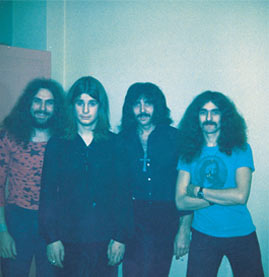
With their riff-based songs, extreme volume, and dark, demonic subject matter, Black Sabbath embodied key aspects of the heavy-metal aesthetic. Yet in their own words, Black Sabbath saw themselves as a “heavy underground” band. That term denoted both the intensity of their music and the network of fans who found them long before critics and the music industry took notice. In a sense, though they’ve sold more than 75 million albums worldwide, they still are a heavy underground band. Although they became eligible for the Rock and Roll Hall of Fame in 1995, they weren’t inducted until 2006. The truth is, they remain one of the most misunderstood bands in rock history.
The Black Sabbath story began in Birmingham, England, where Ozzy Osbourne, Tony Iommi, Geezer Butler and Bill Ward were looking to escape a life of factory work through music. The four musicians got their start in such psychedelic outfits as the Rare Breed and Mythology (although Osbourne had been a short-haired Mod who loved soul music). Influenced by the reigning British blues bands - Led Zeppelin, Cream, John Mayall’s Bluesbreakers - the four of them formed Earth Blues Company (shortened to Earth), in 1968.
Everything changed when Butler came to the band with an idea for a song inspired by a disturbing apparition. A fan of horror films and the black magic-themed novels of Dennis Wheatley, he flirted briefly with the black arts. But when he saw what he believed to be a figure from the dark side at the foot of his bed one night, he ceased his dabblings in the goth world. With lyrics by Osbourne, the group composed a song about the visitation, entitling it “Black Sabbath” (after the 1963 Boris Karloff film).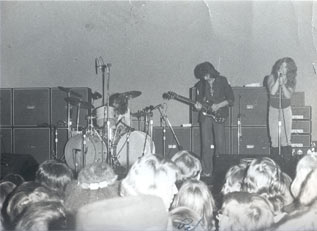 It provoked a reaction in audiences unlike anything else in their repertoire, and they knew they’d stumbled onto something powerful and unique. Forced to change their name because there was already another band named Earth, they made an obvious choice: Black Sabbath.
It provoked a reaction in audiences unlike anything else in their repertoire, and they knew they’d stumbled onto something powerful and unique. Forced to change their name because there was already another band named Earth, they made an obvious choice: Black Sabbath.
“That’s when it all started to happen, “ Tony Iommi told writer Mick Wall. “The name sounded mysterious, it gave people something to think about, and it gave us a direction to follow.” Black Sabbath was the polar opposite of the Beatles (though they all liked the Beatles). Whereas the Fab Four sang “yeah, yeah, yeah,” Osbourne pleaded “no, no, please, no” in “Black Sabbath.”
“It’s a satanic world,” Butler told Rolling Stone in 1971. “The devil’s more in control now. People can’t come together, there’s no equality. It’s a sin to put yourself above other people, and yet that’s what people do.”
With Butler serving as principal lyricist and Iommi as the musical architect, Black Sabbath pursued such themes as war, social chaos, the supernatural, the afterlife, and the timeless conflict between good and evil. The group was a product of the late Sixties. It was a time when youthful idealism had begun to ebb amid the war in Vietnam, the influx of hard drugs, clashes with authority figures, and the bruising realities of working-class life (low wages, grim labor) that lay ahead for many of them.
With Butler serving as principal lyricist and Iommi as the musical architect, Black Sabbath pursued such themes as war, social chaos, the supernatural, the afterlife, and the timeless conflict between good and evil. The group was a product of the late Sixties. It was a time when youthful idealism had begun to ebb amid the war in Vietnam, the influx of hard drugs, clashes with authority figures, and the bruising realities of working-class life (low wages, grim labor) that lay ahead for many of them.

“We arrived at the height of the Vietnam War and on the other side of the hippie era, so there was a mood of doom and aggression,” guitarist Iommi told writer Chris Welch in 2003. That’s not to say Black Sabbath were devil worshippers or practitioners or witchcraft, as many believed. Quite a different picture of the band is painted in such songs as “After Forever” (with the lyric, “God is the only way to love”) and Osbourne’s frequent flashing of the peace sign during Black Sabbath concerts.
Black Sabbath recorded its self-titled first album in a single session in November 1969, setting up their gear in a small studio and running through their live set. The lack of frills and contrivance worked to advantage, as the group’s riff-driven, blues-based hard rock came through loud and clear on “The Wizard,” “N.I.B.,” “Warning,” and, of course, “Black Sabbath.” The only effects added to the album were the tolling bell and thunderstorm that provide a chilling opening to the title track.Black Sabbath was released on Vertigo in the U.K. and Warner Bros. in the U.S.
Black Sabbath took a similarly quick and unadulterated approach to the recording of Paranoid, which was also cut in a few days. Generally regarded as the quintessential Black Sabbath album, Paranoid (1970 in the U.K.; 1971 in the U.S.) contained such classic tracks as “Iron Man,” “Paranoid” and “War Pigs.” The last of these is a potent antiwar song - and specifically “an anti-Vietnam statement,” in Butler’s words - whose hellish visions of bloody battlefields and conniving politicians have lost none of their currency over the decades. 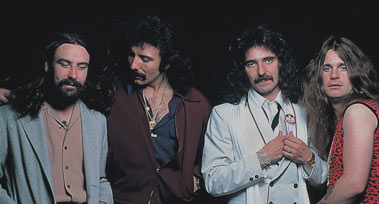 Together, Black Sabbath and Paranoid - released only seven months apart - were powerful works that pointed rock in a harder, heavier new direction. Many of the most hard-hitting and uncompromising bands who came after them - including Metallica, Guns ‘n’ Roses, Iron Maiden and Judas Priest - claim to have been raised on the music of Black Sabbath.
Together, Black Sabbath and Paranoid - released only seven months apart - were powerful works that pointed rock in a harder, heavier new direction. Many of the most hard-hitting and uncompromising bands who came after them - including Metallica, Guns ‘n’ Roses, Iron Maiden and Judas Priest - claim to have been raised on the music of Black Sabbath.
The band’s musicality was generally overlooked, but they possessed an inventiveness and fluency that, in hindsight, makes them seem as much of a progressive-rock band as a heavy-metal one. Their lengthy songs had frequent meter changes, like the works of such peers as Jethro Tull (to which Iommi briefly belonged) and Yes (with whom Black Sabbath toured). There was ample room for improvisation, and Iommi, Butler and Ward were up to the task. In fact, Black Sabbath could swing with a jazzy temperament using bluesy forms and scales. Consider some of their influences: Drummer Ward grew up listening to Count Basie, bassist Butler had his head turned by Frank Zappa, guitarist Iommi found inspiration in gypsy-jazz guitarist Django Reinhardt, and vocalist Osbourne was a rabid fan of soul music in general and Sam and Dave in particular. His voice was melodic and well-pitched, and he never resorted to the sort of histrionic screaming that became a hallmark of metal’s lesser lights.
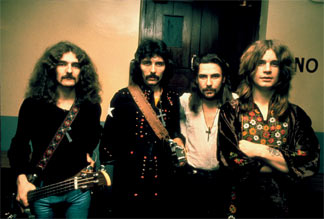
The response to Sabbath’s first two albums was instantaneous. Black Sabbath reached Number Eight in Britain and exhibited staying power in America, hanging on the charts for 65 weeks. Paranoid repeated the feat, peaking at Number 12 in the U.S. and charting for 70 weeks; while reaching Number One in the U.K. in a 27 week run. Both albums were certified gold within a year of release. Black Sabbath became an indefatigable road band, touring constantly and playing many of the early-Seventies rock festivals. All of the roadwork improved them as musicians and songwriters, and their next two albums - Master of Reality (1971) and Vol. 4 (1972) - exhibited enhanced range and ambition. The group even threw in some notable changes of pace - such as the ballads “Solitude” and “Changes” and the instrumentals “Orchid” and “Laguna Sunrise” - to create more of a play of light and shadows. Those albums contained their share of crunching Sabbath classics, such as “Children of the Grave” and “After Forever” (from Master of Reality) and “Snowblind” and “Supernaut” (from Vol. 4).
Amazingly, Black Sabbath had released four genre-defining albums in a two-year period while touring at a ceaseless pace. The group’s fifth album, Sabbath Bloody Sabbath (1973), showed further signs of growth and experimentation, and the title track ranks among their finest moments. As a totality, it comes closest to equaling their early masterpiece,Paranoid. The group wrote and rehearsed the material for Sabbath Bloody Sabbath at a castle in Wales that they claimed was haunted, further fueling their music’s unnerving vibe at a time when the group was testing its own mental and physical limits.
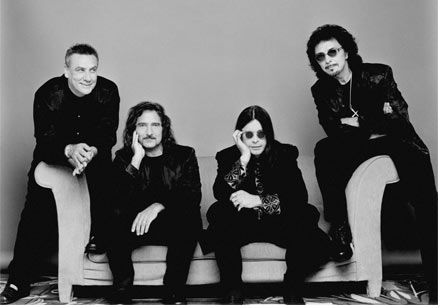
The demanding pace of the road and various lifestyle excesses began catching up with Black Sabbath by the mid-Seventies. Their next three albums - Sabotage(1975), Technical Ecstasy (1976) and Never Say Die! (1978) - all had memorable moments but lacked the unalloyed brilliance of their predecessors. The cracks in Black Sabbath’s façade became permanent when Osbourne quit for good in 1978, following the checkered Never Say Die! tour.
Osbourne went on to a highly successful solo career, which also saw him venture into reality TV (MTV’s popularThe Osbournes series) and launch the annual Ozzfest tour. Helmed by guitarist Iommi, Black Sabbath persevered through a succession of lineup changes that sometimes did and sometimes didn’t include Butler and Ward. Several of Black Sabbath’s post-Osbourne albums - especially Heaven and Hell (1980), Mob Rules(1981) and Headless Cross (1989) - are highly regarded by hardcore fans. But when all was said and done, the classic lineup could not be bested.
The original foursome has reunited on a handful of occasions, most notably for a pair of 1997 stadium shows back home in Birmingham (released a year later as Reunion) and in 1999, 2002, 2004 and 2005, when Black Sabbath headlined Osbourne’s “Ozzfest” festival.
PARANOID!!
IRON MAN !
THE MOB RULES !!!
